








Hydrostatic testing is not an isolated operation added at the end of steel pipe manufacturing. In a properly arranged pipe mill, the hydro testing machine for pipe is integrated with material handling, inspection, marking, and downstream finishing so that pressure testing does not become the production bottleneck.
The exact position varies with pipe type and mill layout, but the engineering logic is similar: the pipe must arrive at the testing station with the required dimensions and end condition, be positioned and sealed correctly, filled with water, pressurized, held for the specified test condition, depressurized, and then transferred to the next operation.
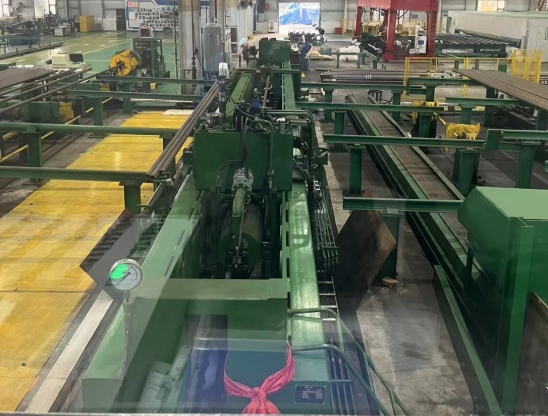
1. Where Hydrostatic Testing Fits in the Line
A typical steel pipe production sequence can be simplified as:
Pipe forming or rolling → welding/heat treatment → sizing and straightening → NDT and dimensional inspection → hydrostatic testing → marking/finishing → final inspection → storage or dispatch
The sequence is not universal. Some mills place ultrasonic or other NDT operations before hydrostatic testing, while others combine inspection and testing into a more integrated finishing section.
|
Production Stage |
Main Purpose |
Relationship to Hydrostatic Testing |
|
Forming / welding |
Produce the pipe body and weld |
Determines pipe geometry and weld condition |
|
Sizing / straightening |
Control OD, straightness and end geometry |
Directly affects positioning and sealing |
|
NDT |
Detect internal or surface-related discontinuities |
Provides a different inspection mechanism from hydrotesting |
|
Hydrostatic testing |
Verify pressure-containing integrity |
Tests the finished pipe under the specified hydraulic condition |
|
Marking / finishing |
Identification and final processing |
Test result may become part of production records |
Hydrostatic testing therefore complements, rather than replaces, NDT. A pipe ultrasonic testing machine and a steel pipe hydrostatic testing machine examine different aspects of pipe quality.
2. The Pipe Must Be Ready Before It Reaches the Hydro Test Station
For the hydrotest machine, pipe dimensions are not simply production data. They determine how the machine can handle and seal the pipe.
Before testing, the production line should provide controlled information on:
|
Parameter |
Why It Matters to the Hydro Test |
|
Outside diameter |
Determines test-head and sealing configuration |
|
Wall thickness |
Affects the required test condition and machine configuration |
|
Pipe length |
Affects handling, filling volume and cycle time |
|
Pipe-end geometry |
Directly affects sealing reliability |
|
Pipe weight |
Determines transfer and positioning requirements |
|
Surface/end condition |
Can affect sealing and leakage |
This is one reason we do not configure a pipe hydro testing machine from maximum pressure alone. A machine rated for high pressure may still perform poorly if its sealing system, pipe handling, or cycle arrangement does not match the actual production range.
3. What Happens During Hydrostatic Testing?
Once the pipe enters the testing station, the sequence is normally coordinated rather than performed as independent manual operations.
Positioning → sealing → water filling → air removal → pressure build-up → pressure holding → depressurization → release → transfer
The pipe hydrotest machine has to control this sequence consistently because filling and sealing conditions can affect the pressure response just as much as the pump itself.
|
Operation |
Engineering Focus |
|
Positioning |
Pipe centerline and test-head alignment |
|
Sealing |
Reliable contact between pipe and sealing system |
|
Filling |
Sufficient flow and controlled water filling |
|
Air removal |
Minimize trapped air before pressurization |
|
Pressurization |
Stable pressure increase without unnecessary fluctuation |
|
Holding |
Maintain the specified test condition |
|
Depressurization |
Controlled pressure release |
|
Transfer |
Return the tested pipe to the production flow |
For long or large-diameter pipes, water volume and handling time can become significant parts of the cycle. Therefore, production capacity should be evaluated from the complete testing cycle, not pump flow alone.
4. How the Hydro Testing Machine Affects Production Capacity
In a high-volume steel pipe mill, hydrostatic testing can become a bottleneck if the machine requires substantially more time than the upstream or downstream processes.
A hydro testing machine for pipe can be configured with multiple stations so that different pipes are at different stages of the test cycle simultaneously.
|
Production Requirement |
Possible Engineering Response |
|
High pipe throughput |
Multi-station testing arrangement |
|
Wide pipe diameter range |
Interchangeable or configurable sealing system |
|
Long pipes |
Appropriate transfer and positioning system |
|
High test pressure |
Pressure system and test-heads designed for the required condition |
|
Frequent size changes |
Reduced setup and adjustment time |
|
Automated production |
PLC-controlled sequence and interlocks |
The objective is not simply to make the pump faster. If sealing, filling, positioning, or unloading remains slow, increasing pump capacity will not necessarily increase line output.
5. Where Test Results Connect With Quality Control
The hydrostatic test result should be connected with the pipe's production identity wherever traceability is required.
Depending on the mill's quality system, relevant information can include pipe identification, test condition, pressure measurement, holding period, test result, and equipment status.
Current API Spec 5L requirements cover manufacturing, inspection, testing, marking and traceability for applicable line pipe, with the 47th edition published in 2026.
From an equipment perspective, this means the hydrostatic testing machine for pipe should be considered part of the quality-control system rather than only a pressure-generating device.
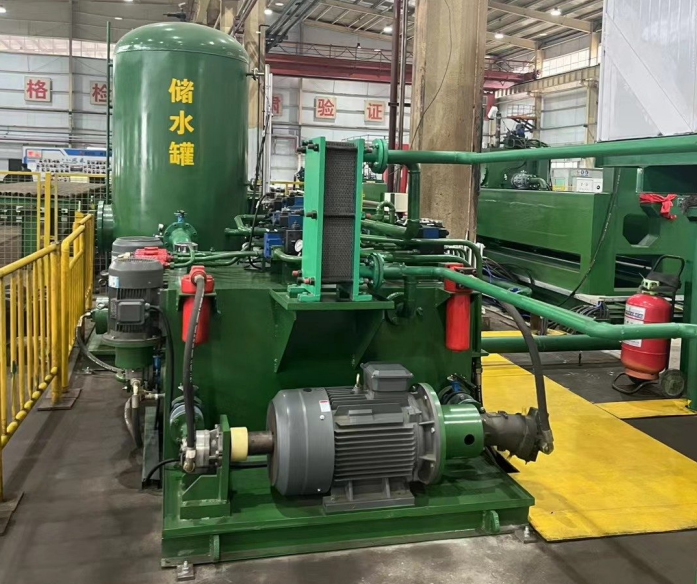
A well-integrated hydrostatic testing section should achieve three things simultaneously:
- Reliable testing — the pipe can be filled, sealed, pressurized and held under the required test condition.
- Stable production flow — testing does not create unnecessary waiting time between upstream and downstream operations.
- Traceable results — test information can be associated with the correct pipe and production batch.
At Marley Machinery, we therefore look at the hydro testing machine as one part of the complete steel pipe production line. Pipe range, sealing method, test pressure, filling system, station quantity, cycle time, handling method and automation level all have to work together.
The best configuration is not the machine with the highest pump pressure. It is the pipe hydro testing equipment that can perform the required test consistently while maintaining the production rhythm of the mill.